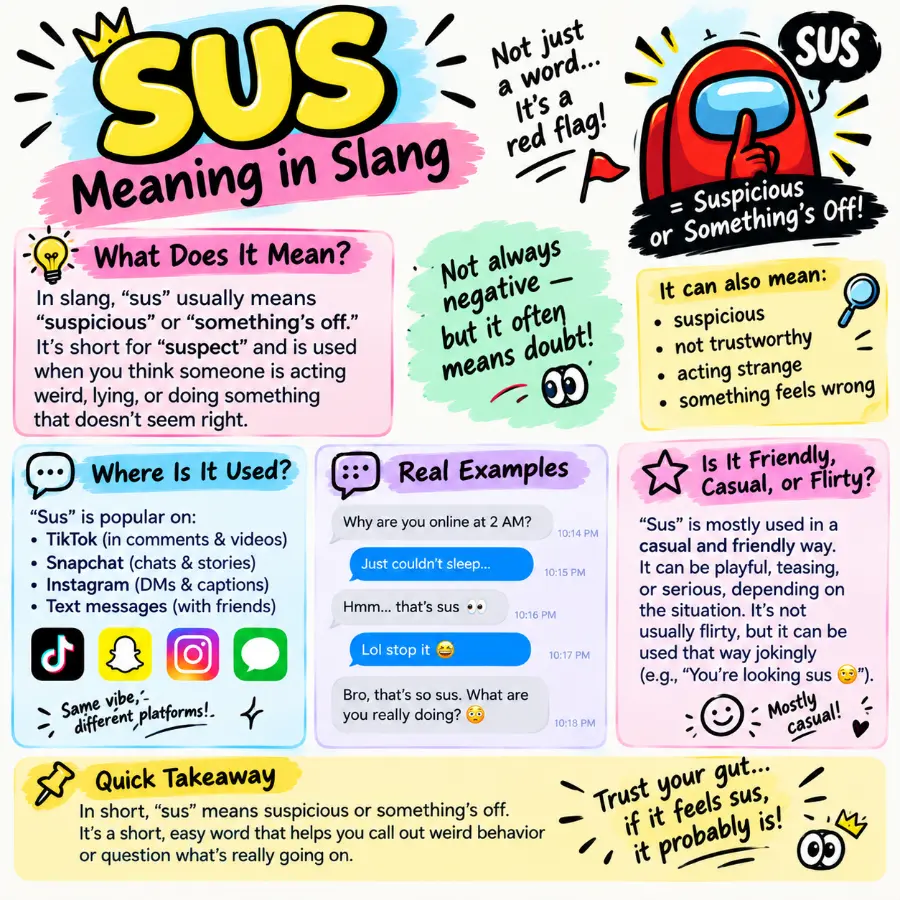
Have you ever opened a chat and seen someone write “sus” and wondered what they meant? You are not alone. This short slang word appears everywhere online, especially in gaming, texting, and social media.
At first, it may look confusing, but its meaning is simple. “Sus” usually means suspicious or someone who seems untrustworthy, strange, or questionable. People often use it when something does not seem right.
The word became especially popular through online gaming and memes, but people now use it in everyday conversations too. In this guide, you will learn what sus meaning slang is, where people use it, and how to use it naturally.
What Does Sus Mean in Text?
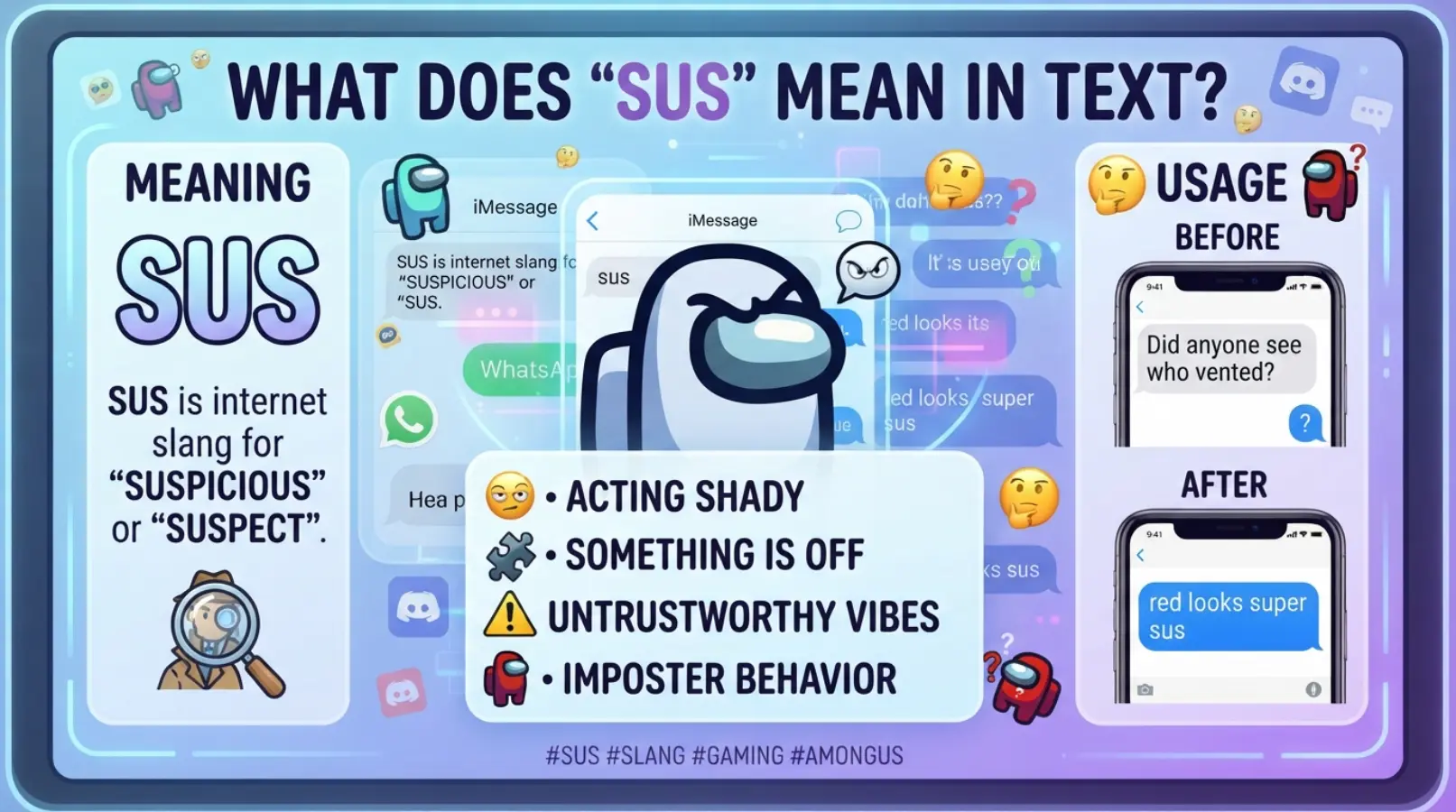
Sus is a short form of “suspicious” or “suspect.”
In texting and social media, people use sus when someone or something seems strange, dishonest, questionable, or hard to believe.
For example:
- “That story sounds sus.”
- “Why are you acting sus?”
- “He left the group chat suddenly. Sus.”
- “That website looks kinda sus.”
The word does not always mean someone is actually doing something wrong. It can also be used as a joke.
For example, your friend might say:
“You ate the last slice and said you didn’t?”
You could reply:
“Very sus 😂”
Here, sus simply means the person’s behavior seems suspicious.
Sus vs. Suspicious
The meanings are almost the same, but the tone is different.
| Word | Meaning | Tone |
|---|---|---|
| Sus | Suspicious or questionable | Casual |
| Suspicious | Something seems wrong | Neutral |
| Suspect | A person or thing believed to be involved | More formal |
Sus is much more common in casual online conversations.
Where Is Sus Used?
You can see sus across many online platforms and conversations.
Snapchat
Friends may use it when joking about someone’s behavior.
Example:
“Why did you delete that message? Sus 👀”
People often use sus in comments, DMs, and memes.
Example:
“That caption is sus 😂”
TikTok
TikTok users may use sus when reacting to strange videos, jokes, or situations.
Example:
“Bro, that explanation is sus.”
Texting
Sus works naturally in casual messages between friends.
Example:
“You disappeared for three hours. Sus.”
Online Gaming
Gaming helped make sus extremely popular. Players often call someone sus when they think that player is lying, cheating, or behaving strangely.
The term became strongly associated with Among Us, where players discuss who seems suspicious.
Examples of Sus in Conversation
Here are several natural examples showing how people use sus.
Example 1: Friendly
A: “Why didn’t you come to class today?”
B: “I wasn’t feeling well.”
A: “Hmm, sus 😂”
This can be playful rather than serious.
Example 2: Gaming
A: “Red was near the body.”
B: “That’s sus. I think Red did it.”
Here, sus means suspicious.
Example 3: Funny
A: “I didn’t eat your cookies.”
B: “You have chocolate on your face. Sus.”
The word adds humor to the conversation.
Example 4: Social Media
A: “This account has no profile picture and keeps messaging me.”
B: “Yeah, that’s pretty sus.”
Here, the person thinks the account may not be trustworthy.
Example 5: Flirty
A: “Why do you keep looking at me?”
B: “No reason 👀”
A: “That’s sus.”
This can create a playful or teasing tone.
Example 6: Group Chat
A: “Who changed the group name?”
B: “Not me.”
C: “You’re acting sus.”
The speaker is jokingly accusing someone.
Example 7: Serious Situation
A: “He asked me for my password.”
B: “That’s really sus. Don’t give it to him.”
Here, sus has a more serious meaning because the behavior could be unsafe.
When to Use and When Not to Use Sus
Sus is best for casual conversations.
You can use it with:
- Friends
- Family members who understand slang
- Gaming friends
- Social media followers
- Casual group chats
- Online communities
It works especially well when you want to sound relaxed, funny, or playful.
When Not to Use Sus
Avoid sus in formal writing unless you are discussing the word itself.
For example, a professional email should not say:
“Your request seems sus.”
Instead, write:
“Your request appears unusual.”
You should also avoid using slang when the other person may not understand it.
In school, work, customer service, or official communication, suspicious, unusual, or questionable usually sounds clearer.
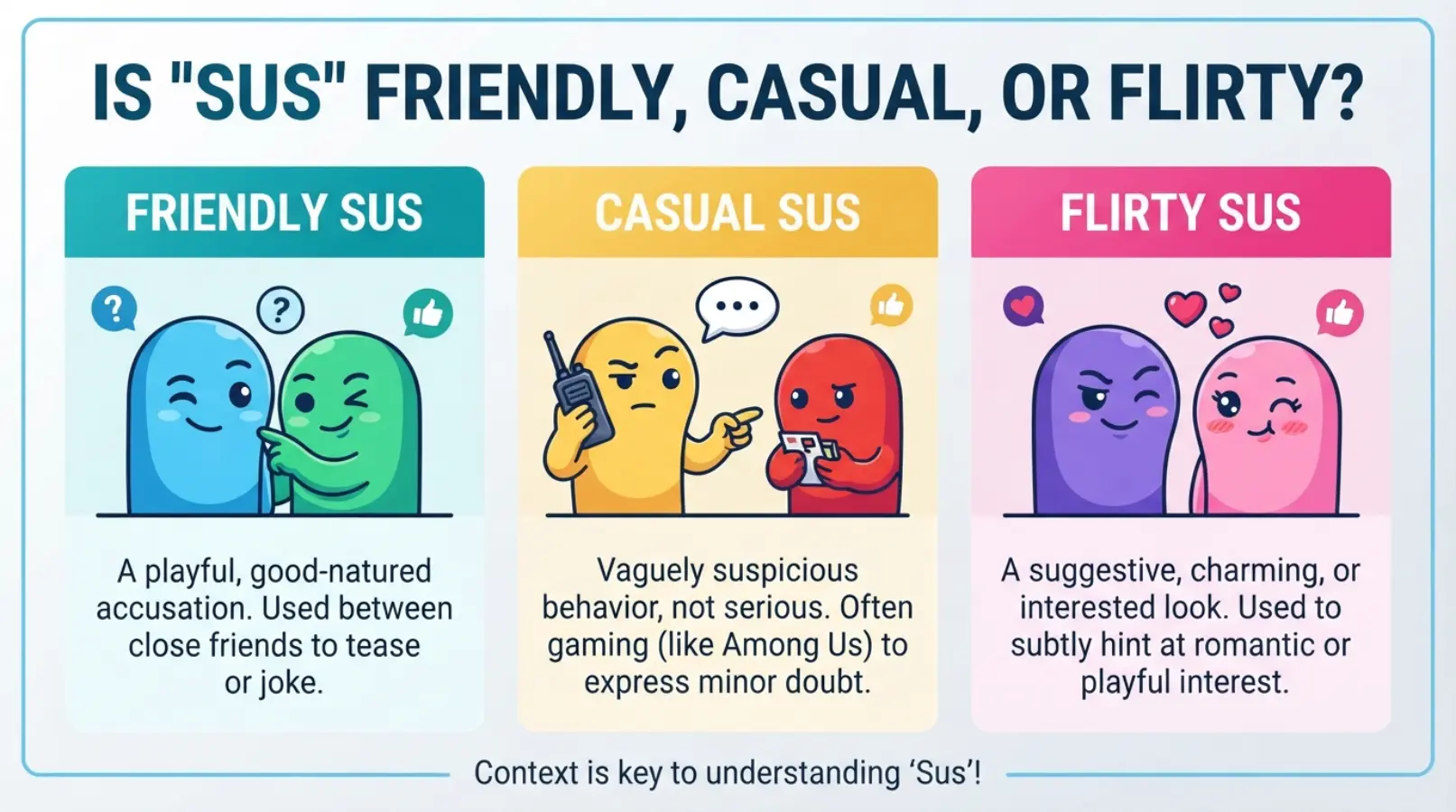
Is Sus Friendly, Casual, or Flirty?
The tone depends on the conversation.
Friendly
“Bro, you’re looking sus today 😂”
This is usually playful.
Casual
“That website looks sus.”
This simply means the website seems suspicious.
Funny
“Your excuse is sus.”
This can be a joke between friends.
Flirty
“You’re acting sus around me 👀.”
In a flirty conversation, sus can be teasing. However, sus itself does not have a romantic or sexual meaning.
The surrounding conversation determines the tone.
Similar Slang Words or Alternatives
If you want to express a similar idea, try these words:
- Sketchy — Something seems unsafe or suspicious.
- Shady — Someone seems dishonest or untrustworthy.
- Weird — Something feels strange or unusual.
- Fishy — Something seems suspicious or hard to believe.
- Questionable — Something seems doubtful or possibly wrong.
For example:
“That deal sounds sus.”
You could also say:
“That deal sounds sketchy.”
FAQs:
What does sus mean from a girl?
If a girl says “sus,” she usually means that something seems suspicious, strange, or questionable. It does not have a special meaning just because she says it.
For example:
“Why are you hiding your phone? Sus 😂”
She may simply be teasing you.
Is sus slang rude?
Usually, sus is not rude. It is generally casual and playful. However, calling someone sus can sound accusatory if the situation is serious.
Your tone and the context matter.
Can I use sus in professional chats?
It is better to avoid sus in professional communication. Use clearer words such as suspicious, unusual, or questionable instead.
Does sus have a flirty meaning?
Sus does not have a specific flirty meaning. However, someone may use it playfully during flirting or teasing.
For example:
“Why are you smiling at me like that? Sus 👀”
The flirting comes from the context, not the word itself.
Is sus still popular in 2025?
Yes. Sus remains widely recognized in online slang, especially among people who use gaming, memes, texting, and social media. Its popularity grew strongly through Among Us and continued into everyday internet language.
Conclusion
Sus is a casual slang word that usually means suspicious, questionable, or strange. People use it in texts, gaming chats, TikTok comments, Instagram messages, Snapchat, and everyday online conversations. It can be serious, but it is often used jokingly between friends. You can also use it in playful or mildly flirty conversations when the context fits. However, avoid sus in formal school or professional messages because it is informal slang. When you see someone write “sus,” simply think “That seems suspicious.” Once you understand the context, using sus naturally is easy.

Rubab Fatima is a passionate content writer and researcher with a strong interest in meanings, symbolism, language, and educational topics. She enjoys creating clear, informative, and engaging content that helps readers better understand words, concepts, and their deeper significance. Through her work at MeaningMindz.com, Rubab focuses on delivering well-researched articles that are both accurate and easy to read. Her goal is to make learning enjoyable while providing valuable insights that readers can trust.











1 thought on “Sus Meaning Slang: What Does “Sus” Mean in Text and Chat?”