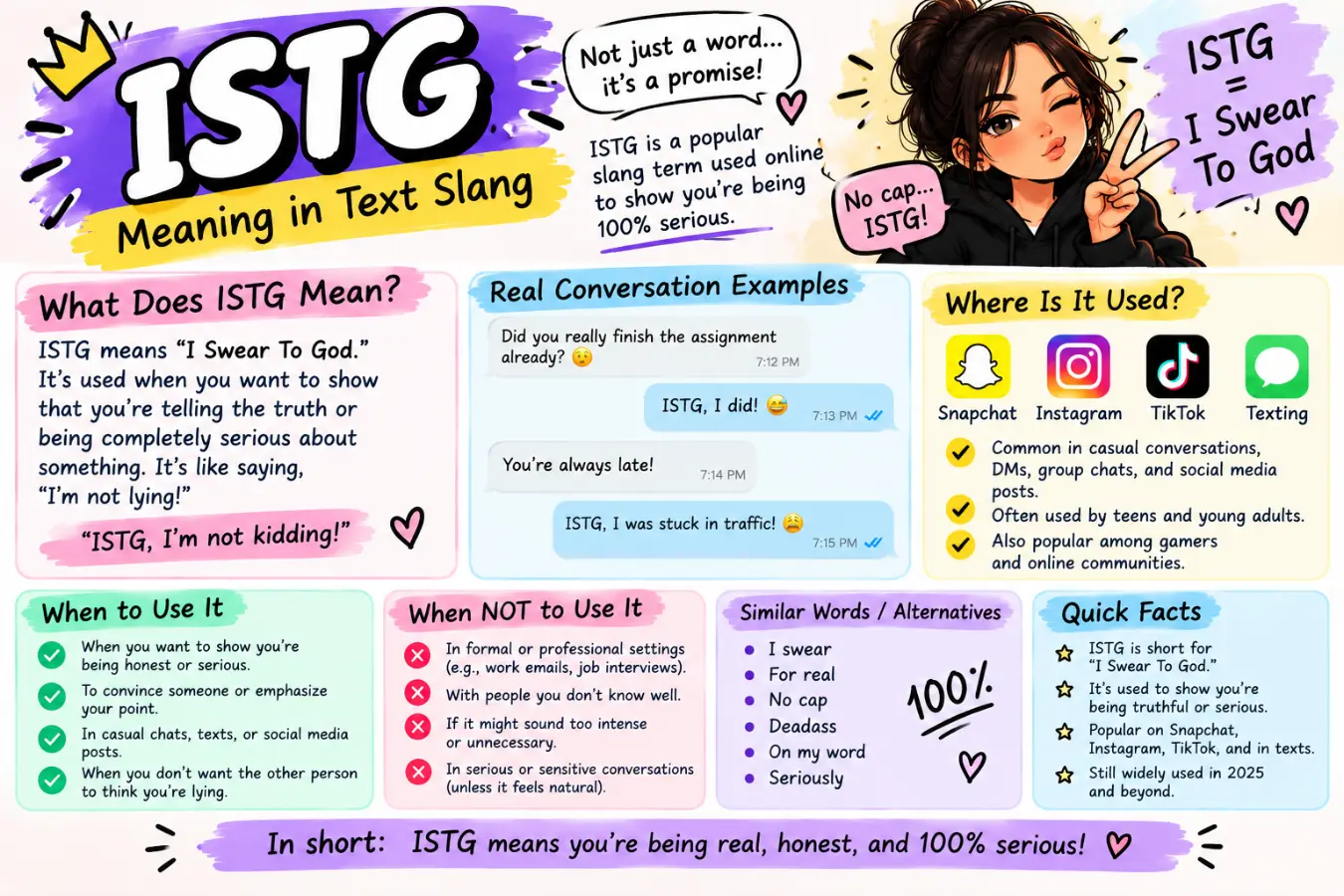
Have you ever opened a text message and seen someone write “ISTG” without knowing what it means? You are not alone! People often use short forms in chats, comments, and social media posts.
At first, these abbreviations can seem confusing. However, once you learn their meanings, online conversations become much easier to understand.
ISTG meaning slang is a popular search because people want to know what these four letters stand for and how to use them naturally. You might see ISTG on Snapchat, Instagram, TikTok, or in everyday text messages. Its meaning can express frustration, surprise, honesty, or strong feelings. Let’s explore its meaning, examples, tone, and best uses.
What Does ISTG Mean in Text?
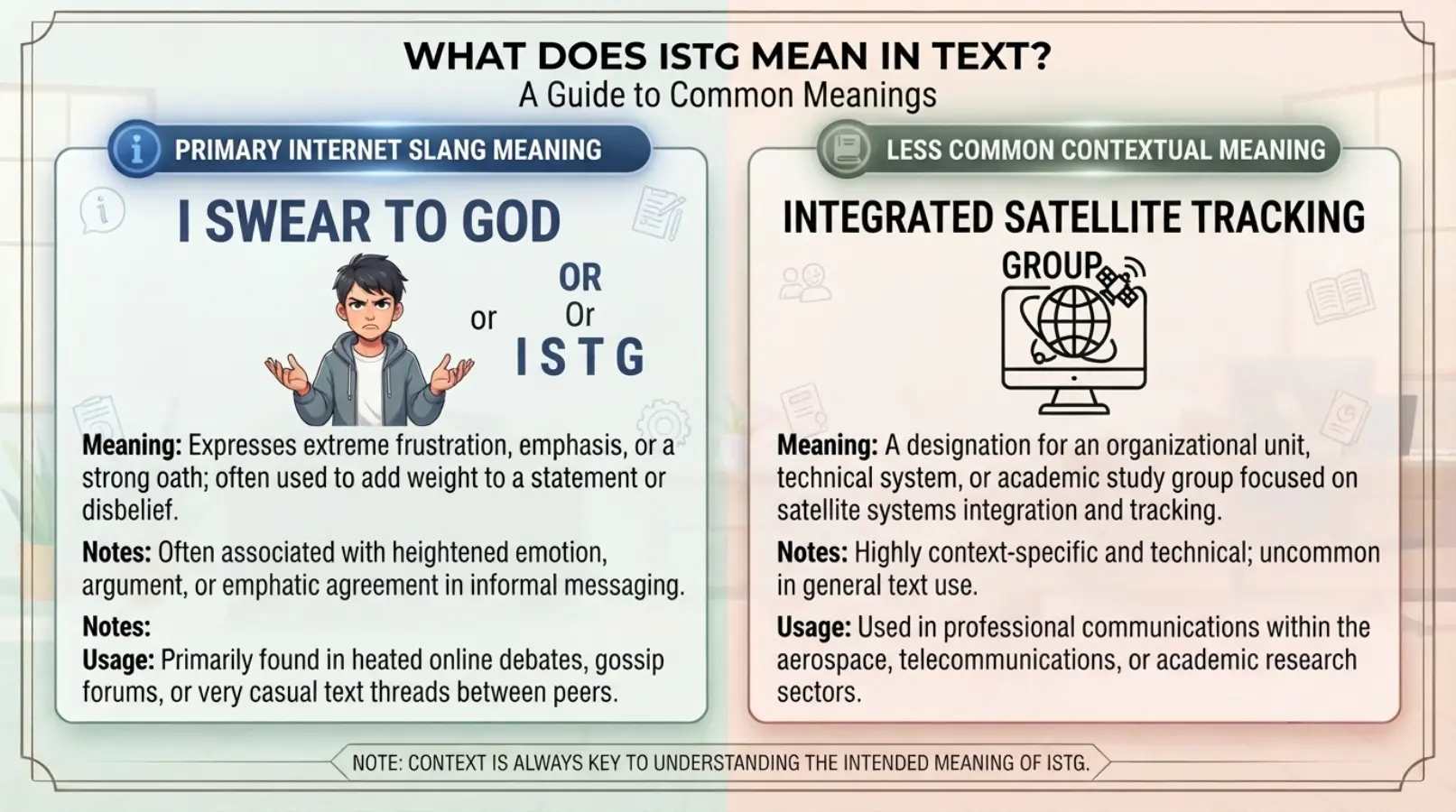
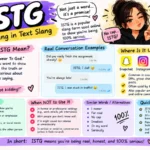
ISTG stands for “I Swear to God.” People use this abbreviation to emphasize that they are serious, telling the truth, making a strong promise, or expressing frustration.
In simple words, ISTG means “I’m serious,” “I promise,” or “I really mean it.” The exact meaning depends on the conversation.
For example:
- “ISTG, I didn’t take your charger.” This shows that the person insists they are telling the truth.
- “ISTG, this movie is amazing!” This expresses strong excitement.
- “ISTG, if he does that again, I’m leaving.” This shows frustration or impatience.
People often type ISTG because it is quicker than writing the entire phrase. It also adds emotion to a message.
Does ISTG Have Different Meanings?
Yes. Although ISTG usually stands for “I Swear to God,” people use it in several ways.
1. To show honesty: Someone wants you to believe what they are saying.
2. To express frustration: Someone feels annoyed, angry, or tired of a situation.
3. To show excitement: Someone wants to emphasize how much they enjoy something.
4. To make a strong promise: Someone wants to show that they genuinely mean what they say.
The abbreviation itself does not change. The surrounding words and the conversation determine its meaning.
Where Is ISTG Used?
ISTG appears across many online platforms. People use it in private messages, public comments, captions, and everyday conversations.
1. Snapchat
On Snapchat, friends often use ISTG when sharing funny stories, reacting to snaps, or expressing annoyance.
Example: “ISTG, that snap made me laugh so hard.”
It helps friends communicate strong emotions without writing long messages.
2. Instagram
Instagram users often include ISTG in comments, direct messages, Reels discussions, and Stories.
Example: “ISTG, this outfit looks perfect on you.”
Here, the abbreviation adds emphasis to a compliment.
3. TikTok
On TikTok, ISTG appears in comments, video captions, and discussions about relatable experiences.
Example: “ISTG, this trend is everywhere now.”
It can communicate amusement, frustration, surprise, or agreement.
4. Text Messages
Friends, couples, classmates, and family members may use ISTG in everyday texting.
Example: “ISTG, I called you three times!”
The message sounds more emotional than simply saying, “I called you three times.”
5. Gaming Chats
Gamers sometimes use ISTG when reacting to frustrating matches, surprising moments, or funny gameplay.
Example: “ISTG, that player is impossible to beat.”
It is common in informal gaming conversations where quick reactions matter.
Overall, ISTG is not limited to teenagers. People of different ages may use it in casual online conversations.
Examples of ISTG in Conversation
The best way to understand ISTG is to see how people use it in realistic messages.
Example 1: Showing Honesty
Person A: Did you eat the last slice of pizza?
Person B: ISTG, I didn’t touch it!
Meaning: Person B strongly insists that they did not eat the pizza.
Example 2: Expressing Frustration
Person A: He forgot our plans again.
Person B: ISTG, he never remembers anything.
Meaning: Person B feels annoyed about the repeated situation.
Example 3: Showing Excitement
Person A: Have you heard her new song?
Person B: ISTG, it’s so good!
Meaning: Person B loves the song and wants to emphasize their excitement.
Example 4: In a Flirty Conversation
Person A: You looked really cute today.
Person B: ISTG, you’re making me blush.
Meaning: Person B is reacting warmly to a compliment. The conversation may feel flirty, depending on their relationship.
Example 5: Making a Promise
Person A: Are you really coming tomorrow?
Person B: ISTG, I’ll be there at 6.
Meaning: Person B strongly assures the other person that they will arrive.
Example 6: A Funny Reaction
Person A: I walked into the wrong classroom today.
Person B: ISTG 😂 how does that even happen?
Meaning: Person B finds the situation funny and expresses surprise.
Example 7: Showing Impatience
Person A: I’ll be ready in five minutes.
Person B: ISTG, you’ve been saying that for an hour!
Meaning: Person B is frustrated because the other person keeps delaying.
These examples show that ISTG can communicate different emotions. Always consider the words, emojis, and relationship between the people chatting.
When to Use and When Not to Use ISTG
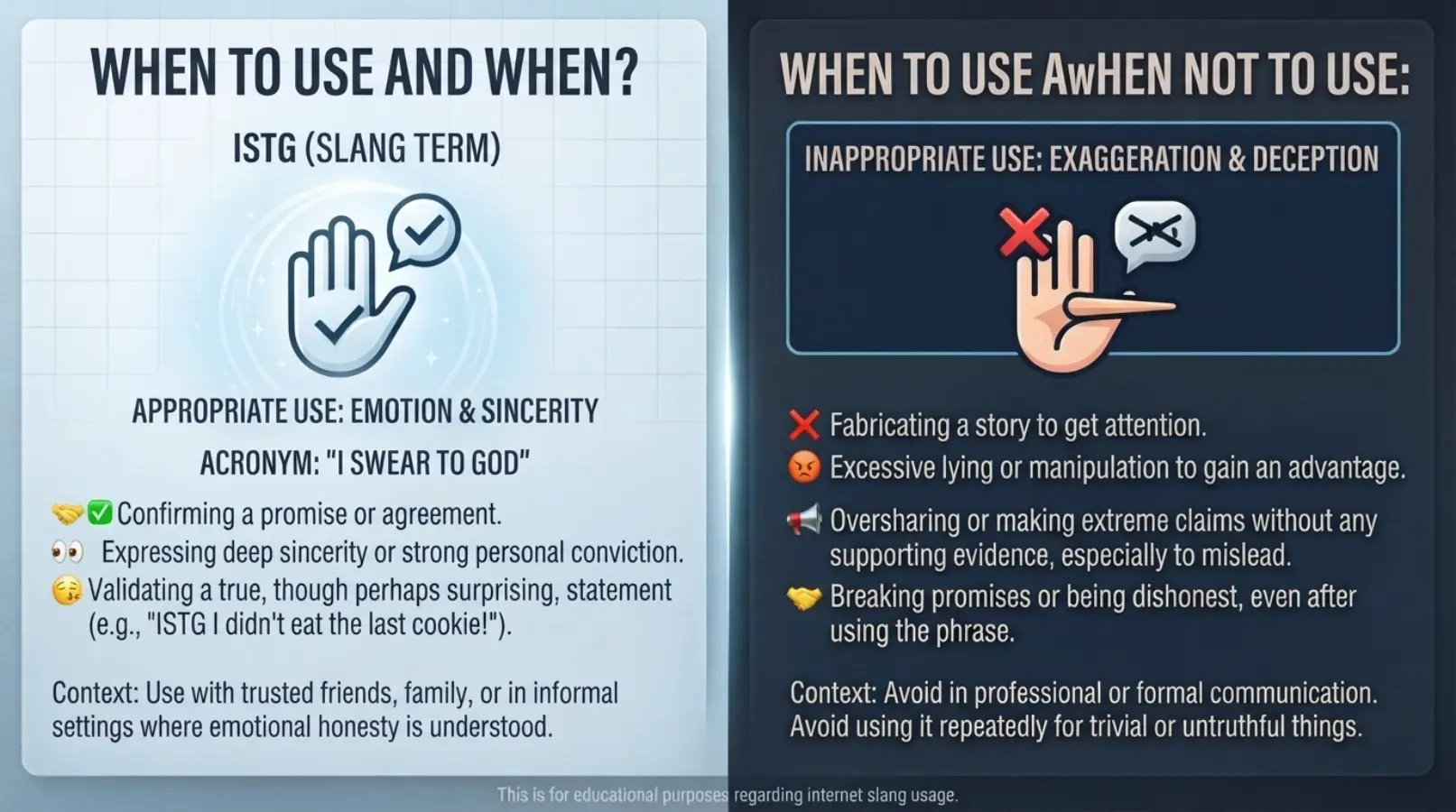
ISTG is useful when you want to emphasize a message. However, it does not fit every situation.
When Should You Use ISTG?
You can use ISTG when:
- Talking with friends: It sounds natural in relaxed conversations.
- Reacting to something funny: It adds emotion to jokes and stories.
- Expressing frustration: It helps show annoyance or impatience.
- Emphasizing honesty: It communicates that you genuinely mean what you say.
- Chatting with someone you like: It can make a casual or flirty conversation feel more expressive.
For example, “ISTG, you’re the funniest person I know” sounds friendly and enthusiastic.
When Should You Avoid ISTG?
Avoid using ISTG in situations where clear, respectful, or formal communication matters.
- Professional emails: Write “I assure you” or explain your point directly.
- School assignments: Avoid slang unless the assignment specifically discusses informal language.
- Formal conversations: The abbreviation may sound too casual.
- Sensitive discussions: The phrase can sound irritated or overly emotional.
- Religious or cultural contexts: Some people may dislike casual references to God, so consider your audience.
Remember, ISTG can sound playful between friends but aggressive during an argument. Your tone and relationship matter.
Similar Slang Words or Alternatives
If you understand ISTG, these related abbreviations may also help you understand online conversations.
| Slang | Full Form or Meaning | Common Use |
|---|---|---|
| FR | For Real | Showing agreement or seriousness |
| ONG | On God | Emphasizing honesty or a strong statement |
| NGL | Not Gonna Lie | Introducing an honest opinion |
| I SWEAR | I Swear | Emphasizing a promise or claim |
| TBH | To Be Honest | Sharing an honest thought |
ISTG vs. FR
ISTG emphasizes a strong claim, promise, or emotional reaction. FR often means “really” or “seriously” and can show agreement.
Example: “ISTG, this test was difficult.”
Example: “FR, that test was difficult.”
Both express strong feelings, but ISTG can sound more intense.
ISTG vs. ONG
1.ISTG and ONG are closely related because both can emphasize honesty or sincerity. ISTG stands for “I Swear to God,” while ONG stands for “On God.”
Their tone depends on the speaker and context.
ISTG vs. NGL
NGL introduces an honest opinion, while ISTG usually adds emphasis to a statement.
Example: “NGL, I didn’t like the movie.”
Example: “ISTG, that movie was terrible.”
Understanding these differences can help you choose the right expression for your message.
FAQs:
1. What does ISTG mean from a girl?
When a girl uses ISTG, it usually means “I Swear to God.” She might be expressing honesty, excitement, frustration, or surprise. The abbreviation alone does not reveal whether she likes you romantically. Read the surrounding messages to understand her intention.
2. Is ISTG slang rude?
ISTG is not automatically rude. Friends often use it casually to express strong feelings. However, it can sound angry, impatient, or disrespectful when someone uses it during an argument. Its tone depends on the situation.
3. Can I use ISTG in professional chats?
It is better to avoid ISTG in formal work conversations, professional emails, and important business messages. Use clearer alternatives such as “I assure you,” “I genuinely mean that,” or “I can confirm this.”
4. Does ISTG have a flirty meaning?
ISTG does not have a specific flirty meaning. However, someone may use it while complimenting you, teasing you, or expressing romantic interest. For example, “ISTG, your smile is adorable” may sound flirty, depending on the relationship.
5. Is ISTG still popular in 2026?
ISTG remains a recognizable abbreviation in informal online communication. People may use it in texts, social media comments, and casual conversations. However, slang popularity changes across communities, so its frequency can vary by platform and age group.
Conclusion
Understanding ISTG meaning slang is simple once you know what the letters stand for. ISTG means “I Swear to God,” and people use it to emphasize honesty, promises, excitement, frustration, or other strong emotions. You may encounter it on Snapchat, Instagram, TikTok, gaming platforms, and everyday text messages.
Its tone depends on the conversation. Among friends, ISTG can sound funny, friendly, or expressive. During an argument, it may sound impatient or angry. It can also appear in flirty conversations, although it does not automatically indicate romantic interest.
The easiest way to understand ISTG is to read the complete message and consider the speaker’s tone. Use it freely in casual chats when it suits your audience, but choose clearer language in formal situations.

Rubab Fatima is a passionate content writer and researcher with a strong interest in meanings, symbolism, language, and educational topics. She enjoys creating clear, informative, and engaging content that helps readers better understand words, concepts, and their deeper significance. Through her work at MeaningMindz.com, Rubab focuses on delivering well-researched articles that are both accurate and easy to read. Her goal is to make learning enjoyable while providing valuable insights that readers can trust.






1 thought on “ISTG Meaning in Slang: Examples, Uses, and Text Replies”