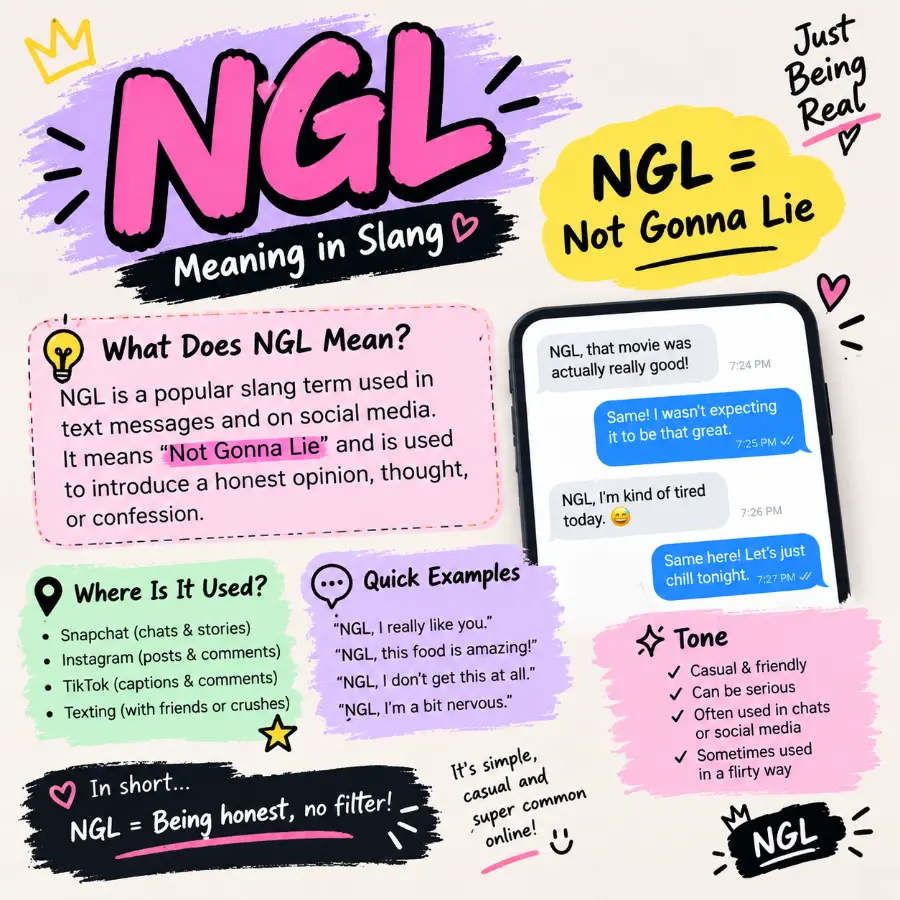
Have you ever been chatting with a friend when they suddenly texted “NGL, that movie was amazing”?
If you wondered what NGL meant, you are not alone. Internet slang can sometimes make online conversations confusing, especially when people use short forms instead of complete sentences. NGL means “Not Gonna Lie.” People use it to share honest opinions, express feelings, or introduce something they genuinely think.
You might see it in text messages, Instagram comments, Snapchat stories, TikTok videos, and gaming chats. It usually creates a casual, friendly tone. In this guide, you will learn what NGL means, how people use it, and how to include it naturally in your everyday conversations.
What Does NGL Mean in Text?
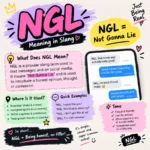
NGL stands for “Not Gonna Lie.” It is a popular internet abbreviation that people use before sharing an honest thought, opinion, confession, or feeling.
In simple words, NGL means “Honestly” or “To be honest.” It signals that someone wants to express what they really think.
For example:
- “NGL, your outfit looks amazing.”
- “NGL, I was nervous about the exam.”
- “NGL, this game is getting boring.”
- “NGL, I miss our old conversations.”
In each example, the speaker introduces a personal opinion or feeling.
Does NGL Have Different Meanings?
NGL usually means “Not Gonna Lie” in texting and social media. However, its meaning can depend on the context.
People commonly use it in three ways:
- Sharing an opinion: “NGL, that restaurant is overrated.”
- Expressing a feeling: “NGL, I felt sad when you left.”
- Giving a compliment: “NGL, you look really cute today.”
Sometimes, people use NGL jokingly or sarcastically. For example, “NGL, that was the worst pizza ever!” expresses a strong negative opinion.
Although NGL emphasizes honesty, it does not guarantee that everything someone says is true. It is simply a conversational expression.
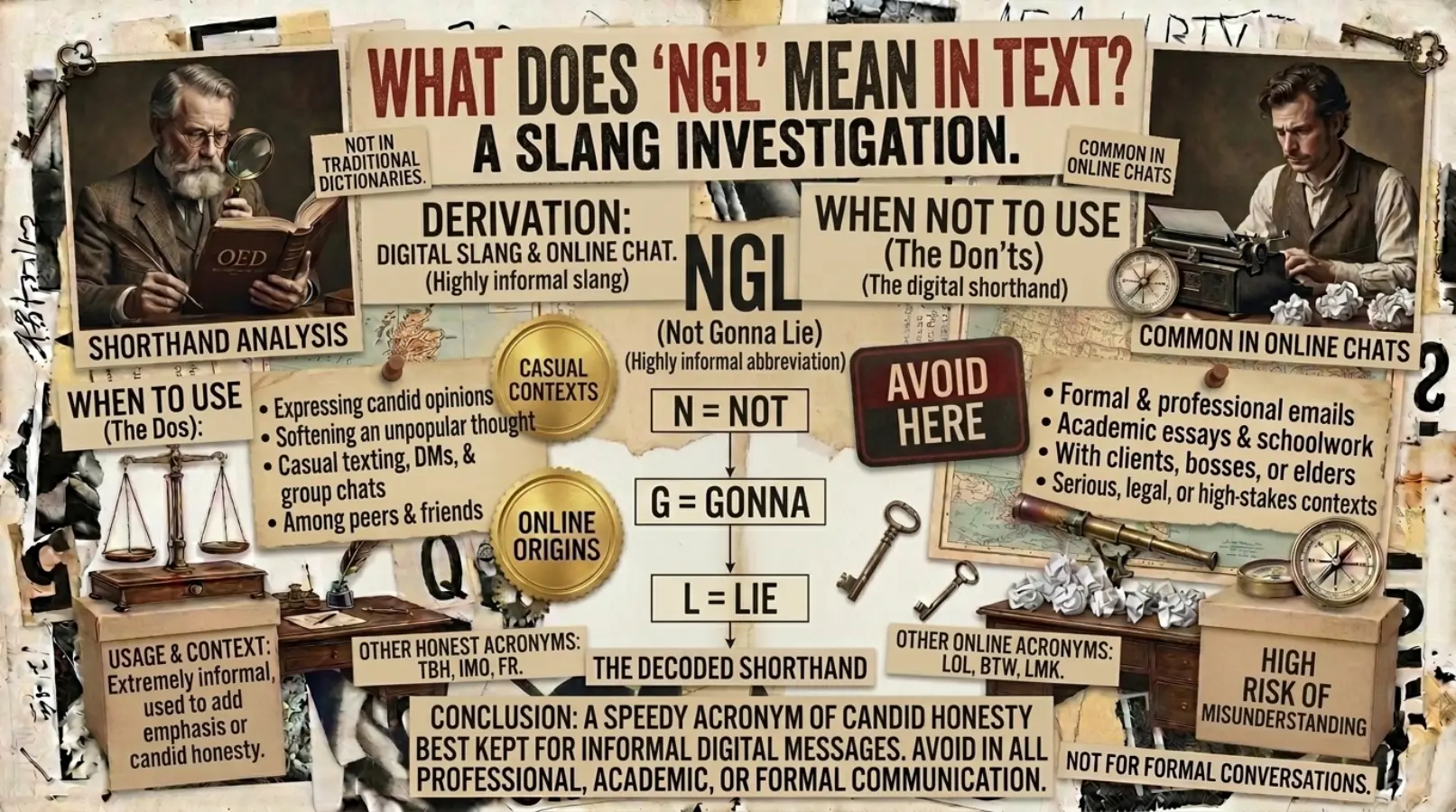
Where Is NGL Used?
NGL appears across many digital platforms. People use it because it is short, easy to type, and sounds natural in casual conversations.
1. Snapchat
Friends often use NGL when sharing feelings, opinions, or confessions.
Example: “NGL, I had so much fun with you today.”
2. Instagram
Instagram users add NGL to comments, captions, and direct messages.
Example: “NGL, this picture deserves more likes.”
3. TikTok
TikTok creators and viewers use NGL in video captions, comments, and reactions.
Example: “NGL, this trend is actually pretty funny.”
4. Text Messages
People frequently use NGL in everyday conversations with friends, family members, and romantic interests.
Example: “NGL, I was waiting for your message.”
5. Gaming Chats
Gamers use NGL to share opinions about games, teammates, and gameplay.
Example: “NGL, your strategy saved the whole team.”
Who Uses NGL?
NGL is common among teenagers, young adults, gamers, and general internet users. However, people of different ages use it in casual online communication.
It is not limited to one social media platform or age group.
Examples of NGL in Conversation
Here are seven realistic examples showing how people use NGL in different situations.
Example 1: Talking to a Friend
Person 1: Did you enjoy the party?
Person 2: NGL, it was the best party this year!
Meaning: The person honestly enjoyed the party.
Example 2: Giving a Compliment
Person 1: Do you like my new hairstyle?
Person 2: NGL, it looks amazing on you!
Meaning: The person is expressing a genuine-sounding compliment.
Example 3: Flirty Conversation
Person 1: Why do you keep smiling at me?
Person 2: NGL, I think you’re really cute.
Meaning: The person is expressing romantic interest or attraction.
Example 4: Talking About School
Person 1: How was the math test?
Person 2: NGL, it was harder than I expected.
Meaning: The person is honestly sharing their opinion about the test.
Example 5: Funny Conversation
Person 1: Did you like my cooking?
Person 2: NGL, even the smoke alarm got scared!
Meaning: The person is making a joke about the cooking.
Example 6: Sharing Feelings
Person 1: Are you excited about moving?
Person 2: NGL, I’m excited but a little scared too.
Meaning: The person is openly expressing mixed emotions.
Example 7: Social Media Comment
Person 1: What do you think of this song?
Person 2: NGL, I’ve played it ten times already.
Meaning: The person likes the song enough to listen repeatedly.
These examples show that NGL can introduce compliments, jokes, criticism, personal feelings, and everyday opinions.
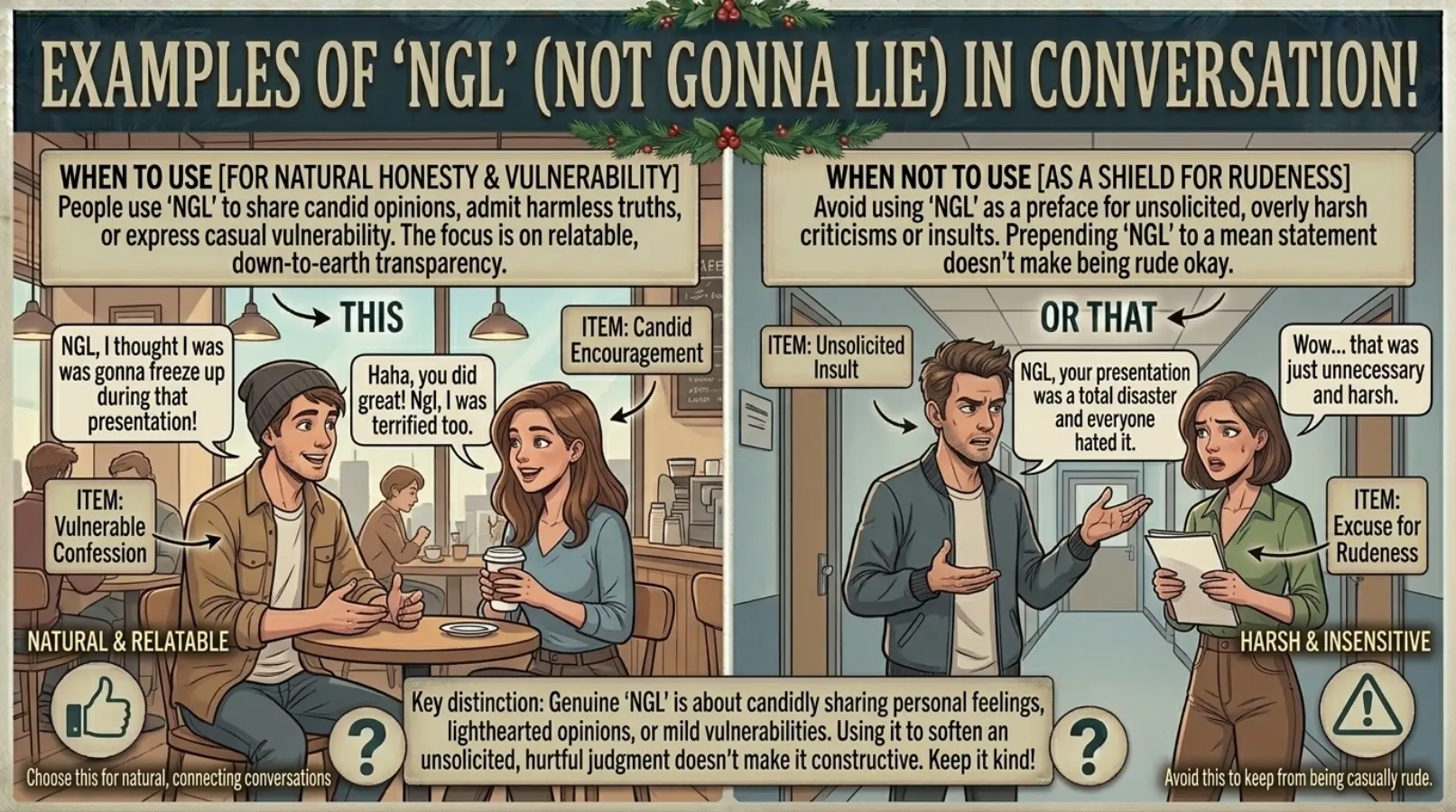
When to Use and When Not to Use NGL
Knowing when to use NGL helps you communicate naturally without sounding too casual in the wrong situation.
When Should You Use NGL?
Use NGL when you want to:
- Share an honest opinion: “NGL, I prefer the blue one.”
- Give a compliment: “NGL, you did a great job.”
- Express feelings: “NGL, I felt nervous.”
- Make a joke: “NGL, I need a vacation after that workout.”
- Start a casual confession: “NGL, I was hoping you’d come.”
It works best when chatting with friends, commenting on social media, or messaging someone you know well.
When Should You Avoid NGL?
Avoid NGL in formal situations where professional language is expected.
For example:
Too casual: “NGL, I can’t finish this project today.”
More professional: “To be honest, I may need additional time to complete this project.”
You should also consider your audience. Some people may not understand internet abbreviations.
In addition, NGL can sometimes introduce criticism that sounds unnecessarily harsh. For example, “NGL, your presentation was terrible” may hurt someone’s feelings.
A kinder alternative would be: “Honestly, I think your presentation could be even stronger with a few changes.”
Quick tip: NGL is informal, but it is not inherently rude. Your words and tone determine how your message sounds.
Similar Slang Words or Alternatives
If you understand NGL, these related expressions can help you communicate more naturally online.
| Slang | Full Form or Meaning | Example |
|---|---|---|
| TBH | To Be Honest | TBH, I loved the movie. |
| FR | For Real | FR, that was amazing. |
| IMO | In My Opinion | IMO, this is the best option. |
| IMHO | In My Humble Opinion | IMHO, we should wait. |
| ISTG | I Swear to God | ISTG, I didn’t take your charger. |
NGL vs. TBH
NGL and TBH are very similar because both introduce honest opinions.
- NGL: “NGL, I’m tired.”
- TBH: “TBH, I’m tired.”
Both sentences communicate the same general idea.
NGL vs. FR
FR means “For Real.” It often emphasizes that something is genuine or true.
- NGL: “NGL, this food is delicious.”
- FR: “This food is delicious, FR.”
Both can express sincerity, but they work slightly differently in a sentence.
FAQs:
1. What does NGL mean from a girl?
When a girl texts NGL, it usually means “Not Gonna Lie.” She may be sharing an honest opinion, giving you a compliment, or expressing her feelings. For example, “NGL, you looked cute today” could be friendly or flirty, depending on your relationship.
2. Is NGL slang rude?
No, NGL is not inherently rude. It is a casual abbreviation used to introduce an honest thought. However, the words that follow it can sound rude, especially when someone uses it to deliver harsh criticism.
3. Can I use NGL in professional chats?
It is better to avoid NGL in formal emails, business proposals, job applications, and official communication. Use “honestly,” “to be honest,” or “in my opinion” instead. NGL may be acceptable in relaxed conversations with close coworkers.
4. Does NGL have a flirty meaning?
NGL does not automatically mean flirting. However, people sometimes use it to introduce romantic compliments or confessions. For example, “NGL, I think about you a lot” may sound flirty depending on the context.
5. Is NGL still popular in 2026?
NGL remains a recognizable internet abbreviation in casual digital communication. People continue to use it in messages, comments, and social media posts. Its popularity may vary by platform and community, but most regular internet users can understand its meaning.
Conclusion
NGL stands for “Not Gonna Lie” and is widely used in texting, social media, and online conversations. It helps people introduce honest opinions, share personal feelings, give compliments, and make jokes. You can use it with friends, in casual messages, and in social media comments. However, it is best to choose more formal expressions in professional communication. Remember that NGL does not automatically make a statement true or mean someone is flirting. The context matters. Once you understand how people use it, you can recognize NGL easily and include it naturally in your everyday chats.

Rubab Fatima is a passionate content writer and researcher with a strong interest in meanings, symbolism, language, and educational topics. She enjoys creating clear, informative, and engaging content that helps readers better understand words, concepts, and their deeper significance. Through her work at MeaningMindz.com, Rubab focuses on delivering well-researched articles that are both accurate and easy to read. Her goal is to make learning enjoyable while providing valuable insights that readers can trust.






1 thought on “What Does NGL Mean in Slang? A Simple Guide for 2026”