Have you ever seen someone write “the ops are here” or “watch out for the ops” on social media and wondered what it meant?
You are not alone! The word “ops” can have different meanings depending on the conversation. In slang, it often refers to opponents, rivals, or people someone considers enemies. You might see it in rap lyrics, TikTok videos, Instagram captions, gaming chats, or everyday text messages.
However, “ops” can also be a shortened form of “operations” in other contexts. Understanding the situation helps you figure out the intended meaning. In this guide, you will learn what ops means in text, how people use it, and how to recognize its tone.
What Does Ops Mean in Text?
In slang, “ops” usually means opponents or opposition. People use it to describe rivals, enemies, or individuals they believe are against them.
The term is associated with street slang and hip-hop culture. It has also become common in online conversations, memes, music, and social media posts.
For example:
- “Stay away from the ops.” — Stay away from the rivals or enemies.
- “He’s hanging out with the ops.” — He is spending time with people considered rivals.
- “The ops are watching.” — Rivals are paying attention.
The word can sound serious, playful, or exaggerated, depending on the context. Friends might jokingly call another group “the ops” during a friendly competition.
Other Meanings of Ops
Although the slang meaning is common online, “ops” has other meanings too.
- Opponents: Rivals or people on the opposite side.
- Operations: A shortened form used in business, technology, and gaming.
- Opportunities: Sometimes used as an informal abbreviation, depending on the group or context.
Quick tip: If you see “ops” in a rap lyric, meme, or conversation about enemies, it probably means opponents. In a workplace message, it may refer to operations.
Where Is Ops Used?
People use “ops” across several online platforms and in everyday conversations. Its exact meaning depends on the topic and the people involved.
1. Snapchat
On Snapchat, friends may use “ops” in private messages, stories, or captions. It can refer to rivals or people they do not trust.
Example: “We saw the ops at the mall today 💀”
The skull emoji may suggest that the situation was funny, awkward, or surprising.
2. Instagram
On Instagram, “ops” can appear in captions, comments, memes, and reels. People sometimes use it to talk about rival groups or joke about friendly competition.
Example: “No love for the ops 😂”
The phrase can be serious or humorous, depending on the post.
3. TikTok
TikTok creators often use slang in videos, sounds, and captions. “Ops” may appear in hip-hop discussions, comedy skits, street-culture content, and memes.
Example: “POV: The ops walk into the party.”
In a comedy video, the phrase might describe an awkward or exaggerated situation rather than a real threat.
4. Text Messages
Friends may use “ops” in group chats when discussing disagreements, rivals, or people they dislike.
Example: “Don’t tell the ops about our plans.”
This suggests that the speaker does not want certain people to learn about their plans.
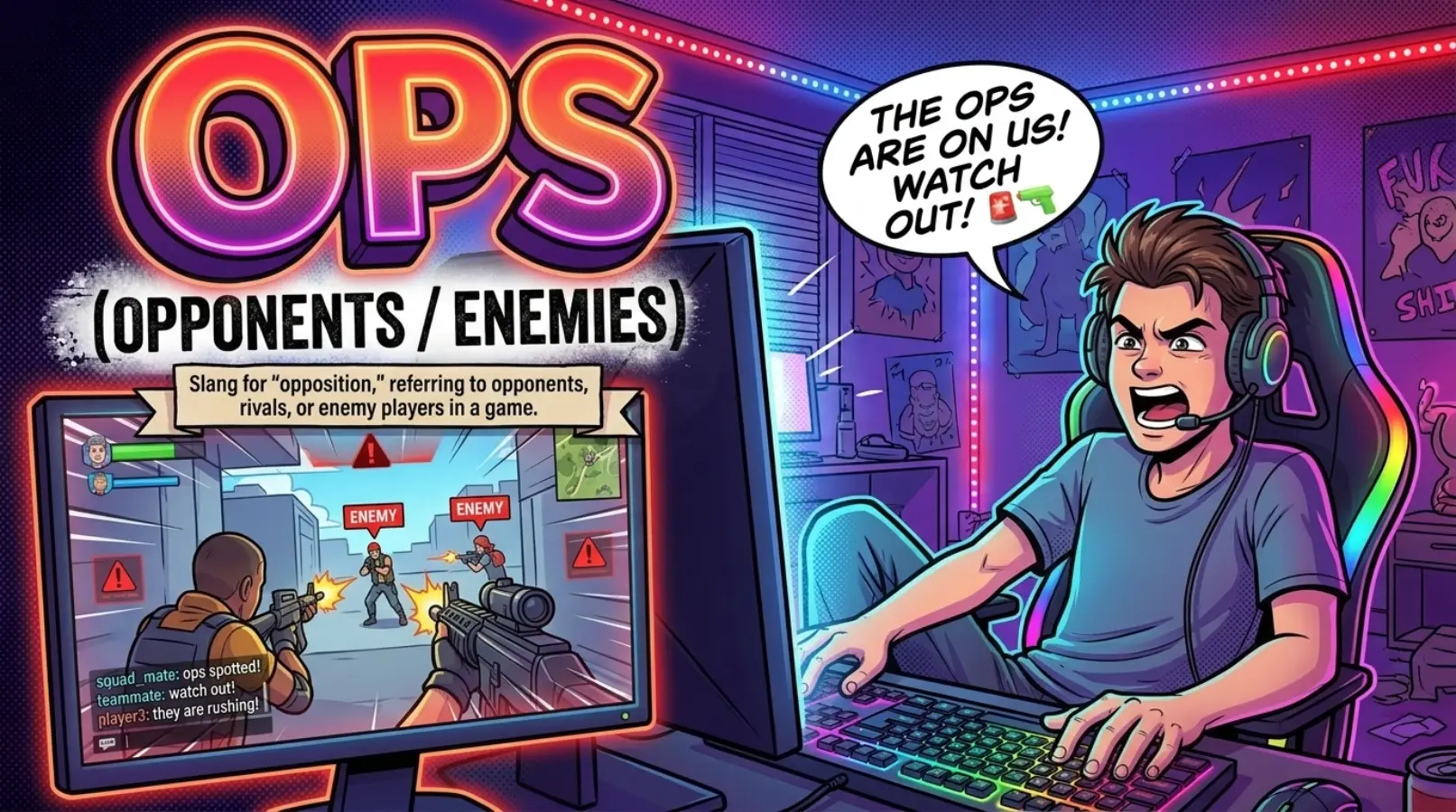
5. Gaming Communities
Gamers may use “ops” to describe opponents or rival teams, especially when joking about competition.
Example: “We defeated the ops in the final round!”
In gaming, the word may simply refer to the opposing team.
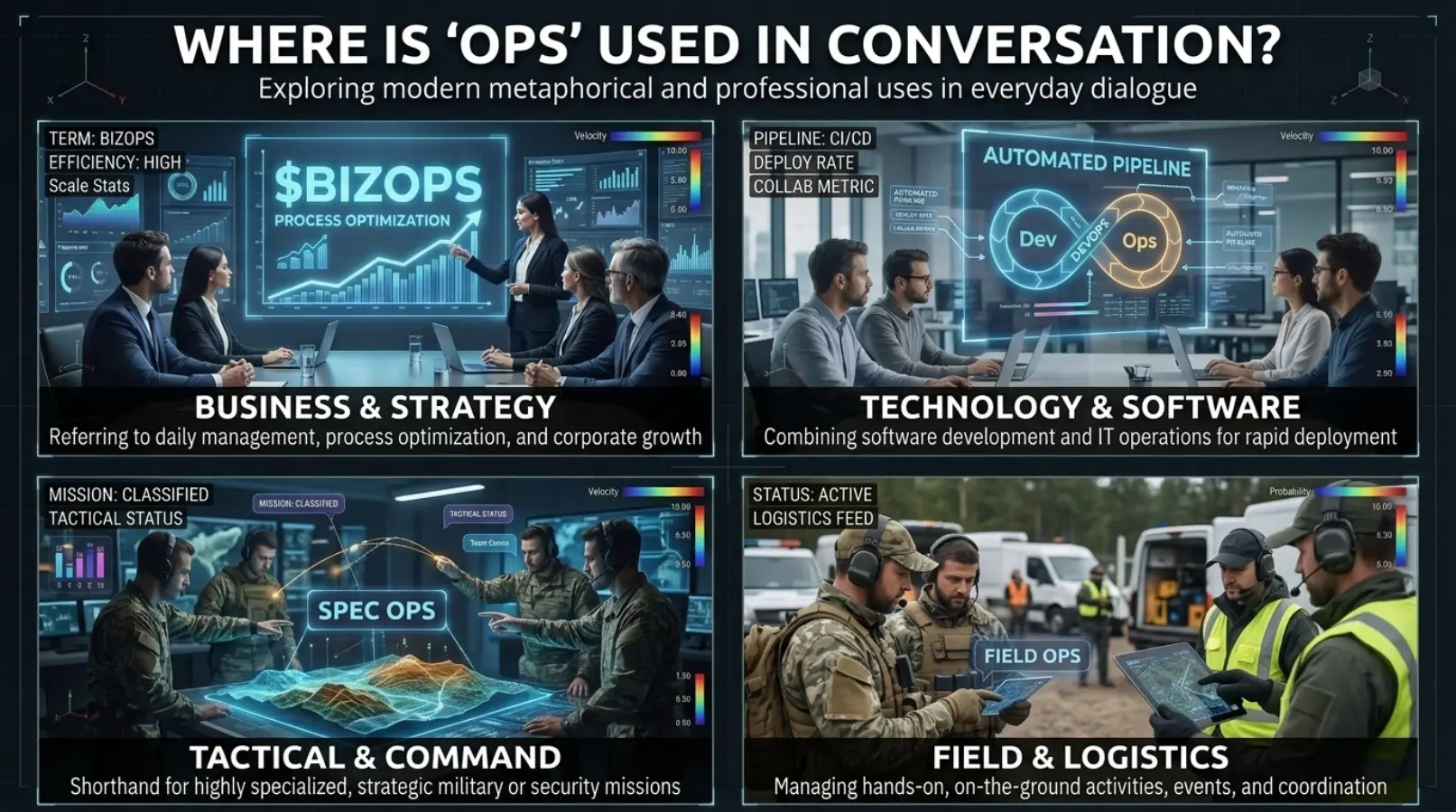
6. Work and Technology
In professional settings, “ops” usually means operations rather than enemies.
For example, “DevOps” refers to practices that bring software development and IT operations together.
Therefore, always consider the subject of the conversation before deciding what “ops” means.
Examples of Ops in Conversation
Here are seven realistic examples showing how people might use “ops” in messages.
Example 1: Talking About Rivals
Person 1: “Why did you leave the party early?”
Person 2: “The ops showed up, so I went home.”
Meaning: The speaker left because people they consider rivals arrived.
Example 2: A Funny Conversation
Person 1: “Who ate my last slice of pizza?”
Person 2: “The ops did it 😂”
Meaning: The second person jokingly blames the imaginary or playful “enemies.”
Example 3: On Snapchat
Person 1: “Did you see my story?”
Person 2: “Yeah, but don’t let the ops see it 💀”
Meaning: The speaker jokingly warns their friend about people they do not trust.
Example 4: Talking About Friends
Person 1: “Are you coming to the game tonight?”
Person 2: “Of course! We’re taking down the ops.”
Meaning: The speaker is excited about competing against the opposing team.
Example 5: A Social Media Caption
Person 1: “What should I caption this photo?”
Person 2: “Something like ‘Unbothered by the ops 😎.’”
Meaning: The caption suggests that the person does not care about their rivals.
Example 6: A Flirty or Playful Chat
Person 1: “You were talking to my crush yesterday 👀”
Person 2: “Relax, I’m not one of the ops 😂”
Meaning: The second person jokes that they are not a rival or threat.
Example 7: A Workplace Message
Person 1: “Who is handling the system update?”
Person 2: “The ops team is taking care of it.”
Meaning: Here, “ops” means operations, not opponents.
These examples show why the surrounding conversation matters. The same word can have very different meanings in different situations.
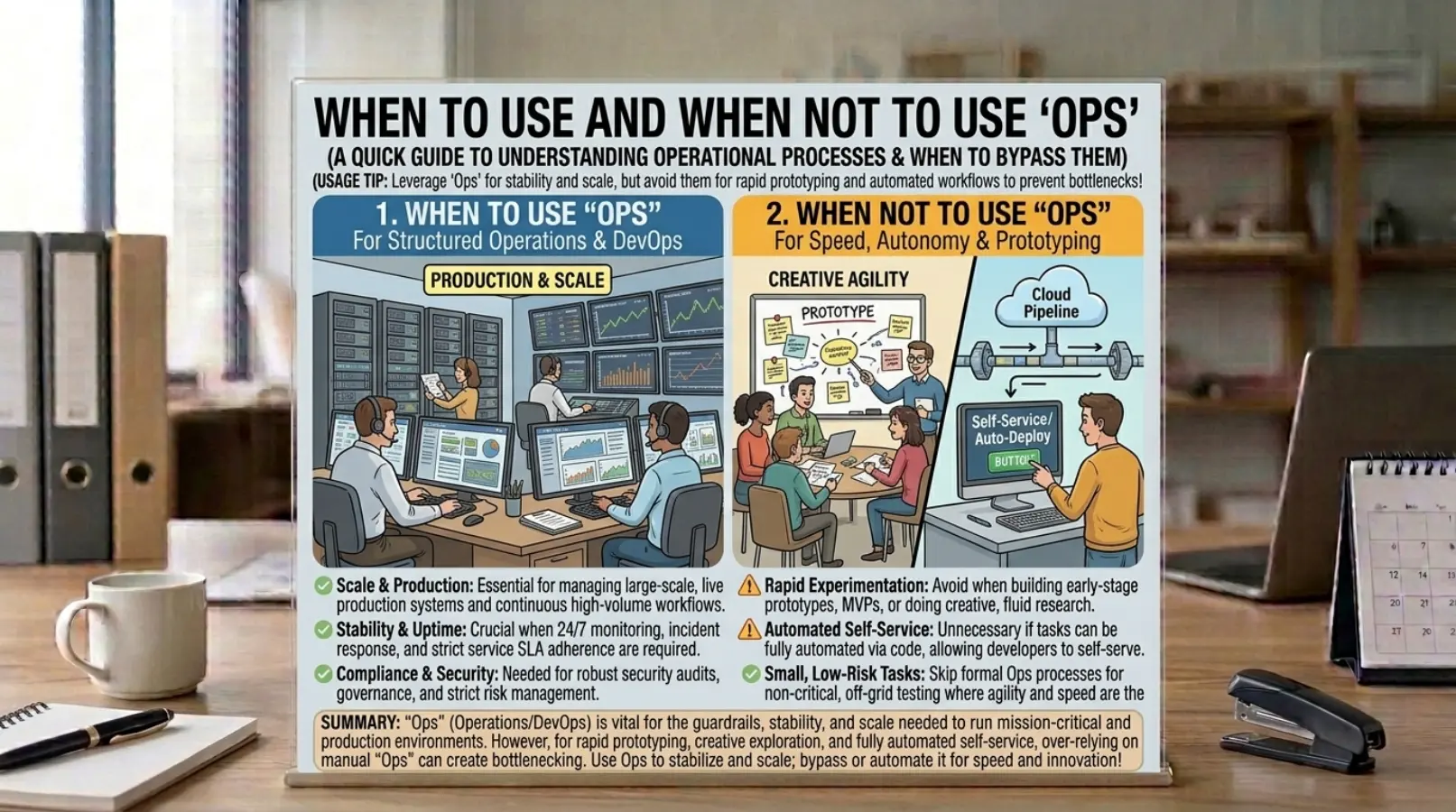
When to Use and When Not to Use Ops
Understanding the tone of “ops” can help you use it naturally without confusing other people.
When to Use Ops
Use the slang meaning when chatting casually with friends who understand internet slang.
It may fit when:
- Talking about rivals or opposing teams.
- Sharing a meme or funny caption.
- Discussing hip-hop lyrics or online culture.
- Making a playful joke with friends.
- Commenting on a competitive gaming match.
For example: “We won again. The ops couldn’t keep up!”
This sounds casual and competitive.
When Not to Use Ops
Avoid using the slang meaning in situations where it might sound aggressive, confusing, or unprofessional.
Be careful when:
- Sending formal emails to teachers or managers.
- Speaking with people who may not understand slang.
- Discussing sensitive conflicts or real-life threats.
- Writing academic assignments or professional reports.
For instance, saying “The ops are outside” could sound alarming if the listener believes you mean actual enemies.
In a workplace message, use the full phrase “operations team” when clarity matters.
Remember: “Ops” is not automatically rude or threatening. Its tone depends on the situation, your relationship with the other person, and how you use it.
Similar Slang Words or Alternatives
If you understand “ops,” these related terms may also help you understand online conversations.
| Slang word | Meaning |
|---|---|
| Opps | Opponents, rivals, or enemies; often used as an alternative spelling of “ops.” |
| Beef | A conflict, disagreement, or ongoing rivalry. |
| Haters | People who criticize or dislike someone. |
| Squad | A close group of friends or teammates. |
| Rival | A person or group competing against someone. |
Ops vs. Opps: What’s the Difference?
“Ops” and “opps” are often used with the same slang meaning: opponents or enemies.
However, spelling and usage can vary between communities, songs, and social media platforms.
For example:
- “The ops are talking about us.”
- “The opps are talking about us.”
Both sentences may communicate the same idea.
In business or technology, “ops” is more commonly used as a short form of “operations.” Context helps you distinguish the meanings.
FAQs:
1. What does ops mean from a girl?
If a girl uses “ops” in a slang conversation, she may mean rivals, enemies, or people she does not trust. She might also use it jokingly with friends. The word itself does not reveal her feelings or intentions.
2. Is ops slang rude?
Not necessarily. “Ops” can be playful, casual, or serious. However, calling someone an opponent or enemy may sound hostile in certain situations. Consider the conversation before using it.
3. Can I use ops in professional chats?
Yes, when “ops” clearly means operations and your workplace commonly uses the abbreviation. For example, “The ops team will review the report.” Avoid the slang meaning in formal messages unless the context makes it appropriate.
4. Does ops have a flirty meaning?
“Ops” does not have a standard flirty meaning. Someone might use it jokingly in a conversation about a crush or romantic competition, but the meaning comes from the surrounding message rather than the word itself.
5. Is ops still popular in 2026?
“Ops” remains recognizable in online slang, hip-hop culture, memes, and casual conversations. Its popularity varies by community and platform. The abbreviation is also widely used in professional contexts to mean operations.
Conclusion
The slang term “ops” usually means opponents, rivals, or enemies. You may see it on Snapchat, Instagram, TikTok, in text messages, and in hip-hop culture. People sometimes use it seriously, while others use it jokingly with friends or during gaming competitions.
However, “ops” can also mean “operations” in business and technology. The easiest way to understand it is to look at the surrounding words and the topic of the conversation. If someone talks about rivals, they probably mean opponents. If they mention a team at work, they likely mean operations.
Use “ops” casually when your audience understands the slang, and choose clearer language in formal situations.

Rubab Fatima is a passionate content writer and researcher with a strong interest in meanings, symbolism, language, and educational topics. She enjoys creating clear, informative, and engaging content that helps readers better understand words, concepts, and their deeper significance. Through her work at MeaningMindz.com, Rubab focuses on delivering well-researched articles that are both accurate and easy to read. Her goal is to make learning enjoyable while providing valuable insights that readers can trust.